Ākenehi Hei - The first nurse to register in Aotearoa under her own Māori name — and the first Māori nurse we know of to hold a theatre post.

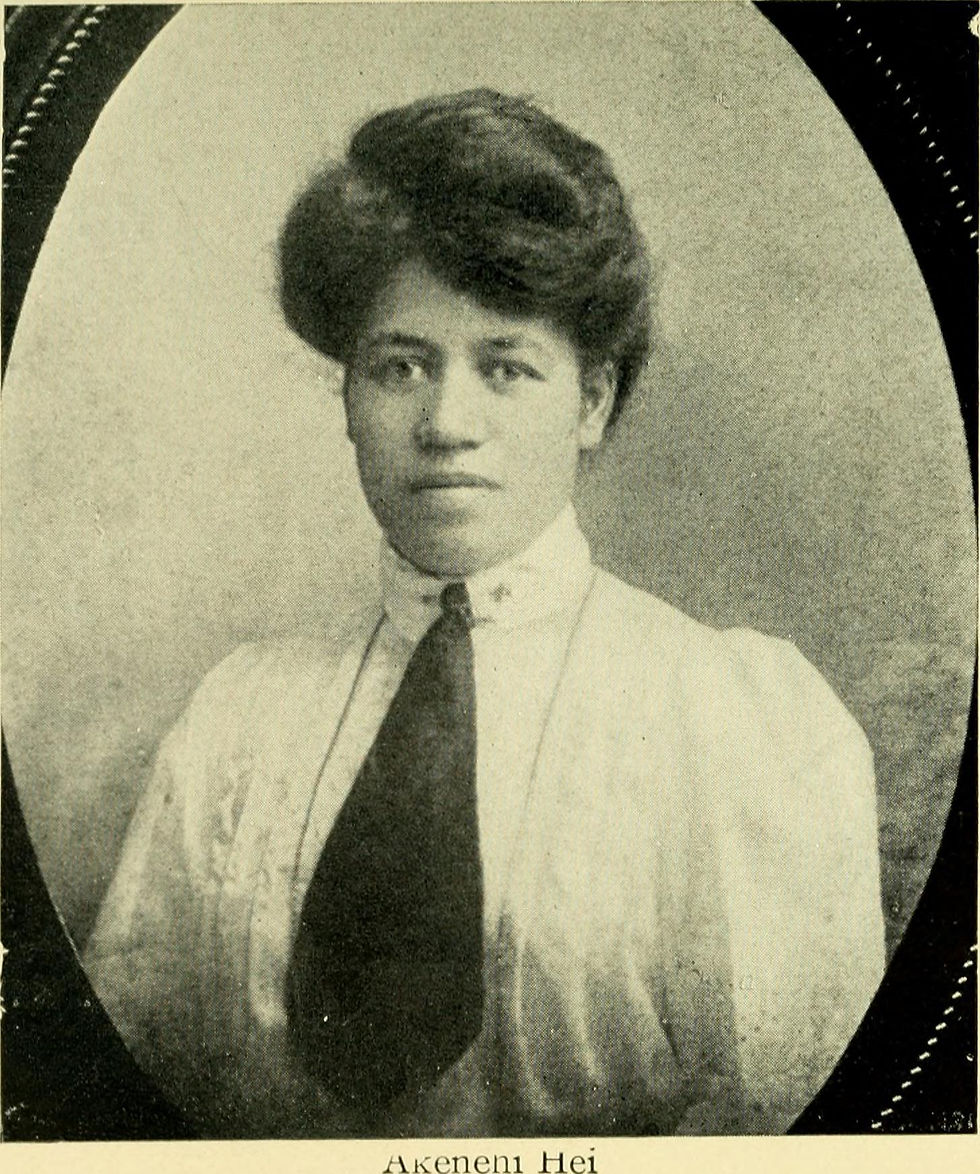
She qualified in June 1908 and was made theatre sister at Napier Hospital. She left the theatre for a tent on a paddock, because that was where her people were dying.
Te Kaha, a native school, and a brother with a plan
Ākenehi Hei was born at Te Kaha in the eastern Bay of Plenty, into a leading Te Whakatōhea and Te Whānau-ā-Apanui family — her mother Maria Nikora, her father Heemi Hei. She went to Te Kaha Native School, then to the convent school at Ōpōtiki, then to St Joseph’s Māori Girls’ College in Napier. Her Pākehā employers sometimes called her Agnes.
Her elder brother Hāmiora Hei, a Te Aute College man, was the one who pushed her towards nursing. He and Apirana Ngata argued for a scheme to train young Māori women in nursing, and James Pope, inspector of native schools, took it up. The intention behind it was not entirely flattering: these women were meant to return to their villages as “preachers of the gospel of health”, counter the influence of tohunga, and raise their children the Pākehā way.
Hei took the training and used it for her own purposes. That gap — between what the scheme was for and what she did with it — is most of her story.
June 1908: qualified, and put in charge of the theatre
Hei began at Napier Hospital in 1901 as an assistant nurse and dresser — dressings, wounds, the unglamorous end of surgical work. In 1905 the scheme was widened to allow full training and she entered as a probationer. She sat her final examination in June 1908 and passed.
The medical superintendent, recorded as “well satisfied” with her work, then appointed her theatre sister. It is worth sitting with that for a moment. In 1908, in a colonial hospital, the newly qualified Māori nurse was given the operating theatre — the post that goes to the person you trust with instruments, asepsis, and a surgeon under pressure. Scrub scout nurses will recognise exactly what kind of judgement that appointment represents.
She is the first Māori nurse we can document holding a theatre post — and she took it three months after qualifying.
Registered under her own name
She is usually described as the first Māori registered nurse. The more precise version is better: at least one Māori woman, Mereana Hathaway, had registered earlier under an anglicised name, and Hei was the first to register under her Māori name, in 1908. Nurses of that era were routinely expected to shed te reo and their own names to be recognised as professionals. She did not.
Wanting district work, which required midwifery, she left the theatre almost immediately for St Helens Hospital in Christchurch and qualified as a midwife in December 1908.
A tent, a horse, and four districts
From 1909 the Department of Public Health employed her to nurse Māori communities largely on her own judgement — Northland, Rotorua, Taranaki and Whanganui. She treated the sick, delivered babies, argued for clean water, and advised on sanitation down to where the latrines were dug. When there was no building, she set up under canvas and called it a hospital, because that is what it was.
She worked without a theatre, without reliable supplies, and often without support from the local Pākehā medical establishment — while also holding the trust of the communities she served, which no departmental nurse sent from Wellington could have done.

28 November 1910: the epidemic she was sent to fight
Typhoid was the disease that defined her working life and ended it. She was nursing typhoid patients, among them members of her own family, when she contracted it herself. She was ill for a fortnight and died on 28 November 1910, aged about thirty-two.
Kai Tiaki, the journal Hester Maclean had founded two years earlier, carried her obituary in January 1911 and called her death a serious loss to her people. Nine years after she died, the Māori nursing service she had effectively been a one-woman prototype of was formally established, staffed by native health nurses, Māori and Pākehā.
Why we tell this one
Because she was a theatre sister, and the theatre is our patch. Because she held that post as a young Māori woman in 1908, when the profession she had just joined expected her to give up her name to be counted. And because she left the theatre for a tent, which is the choice every clinician recognises: the work that needs you is not always the work with the best equipment.
Aotearoa still has too few Māori nurses, and too few in perioperative roles specifically. That is not ancient history; it is a workforce fact we place people into every week. Ākenehi Hei is the earliest evidence that the capability was never the problem.
HE MIHI KI A ĀKENEHI E te whaea, e Ākenehi, moe mai rā i te rangimārie. Ngā mihi nui ki a koe mō tō māia, mō tō aroha, mō tō mahi i waenga i tō iwi. Nāu i para te huarahi mō ngā tapuhi Māori katoa e whai ake nei. Haere, haere, haere atu rā. Ākenehi, our whaea, rest now in peace. Our deep thanks to you for your courage, your compassion, and your work among your people. You cleared the path for every Māori nurse who has followed. Farewell, farewell, farewell. |
BUILD YOUR OWN PERIOPERATIVE CAREERSee the Carejobz Theatre Nurse Salary Guide for current pay and market context, and use the Theatre Nurse Career Playbook for practical guidance on career structure and your next move across Australia and New Zealand. For a confidential conversation, email info@carejobz.com. |
SOURCES · Patricia A. Sargison, “Hei, Ākenehi”, Dictionary of New Zealand Biography; Kai Tiaki 4, no. 1 (January 1911), obituary, via Papers Past; Kaitiaki Nursing New Zealand, “Honouring the voices of Māori women”; NZNO Te Rūnanga o Aotearoa; Christchurch City Libraries Legacy Photograph Collection. Her birth year is given as 1877 or 1878 in the sources and remains unresolved.


